A key finder and music theory coach for iPhone and Android
Find the key of any song, and know why.
Point your phone at the music, open a recording, or tap in the notes you know. Theory Scope names the key, shows its chords, and explains how it knew.
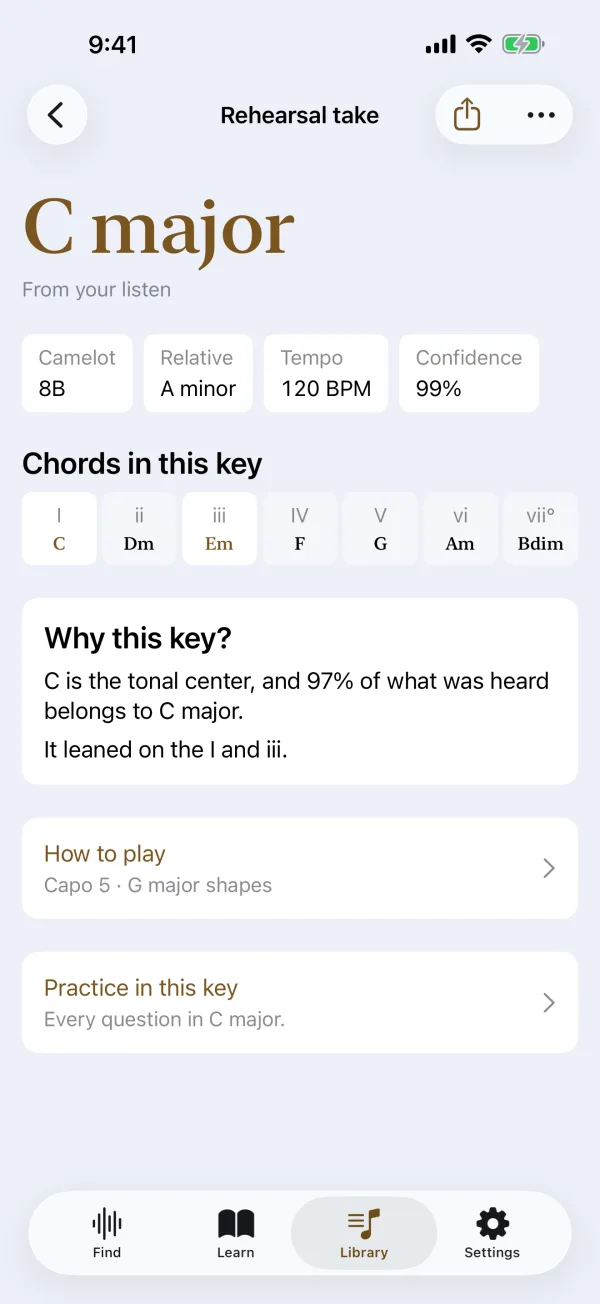
From “what key is this?” to playing along.
Most key finders stop at a name. Theory Scope shows you the chords that belong to the key, where a capo puts you, and a plain-English reason it landed where it did.
Find the key three ways
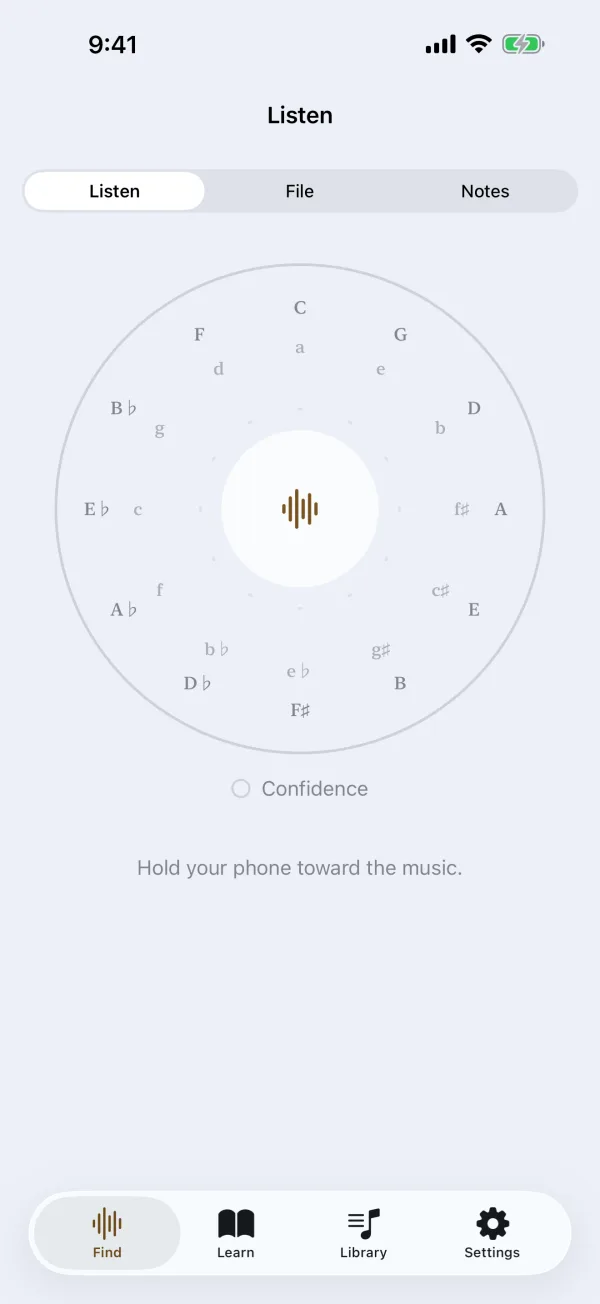
Hold your phone toward whatever is playing. The dial fills as Theory Scope grows confident, and names the key when it is sure.
- Listen to a speaker, a band, or your own playing.
- File: open a recording already on your phone and get its key in seconds.
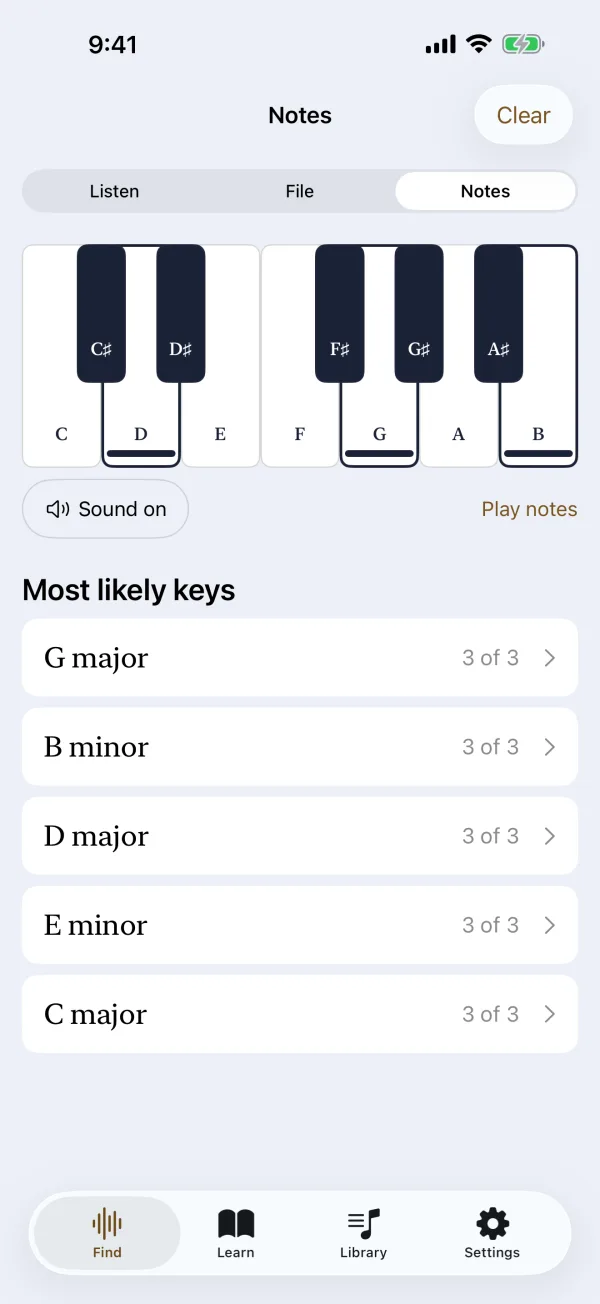
- Notes: tap in the notes you know and see which keys they fit.
- When two keys are genuinely hard to tell apart, it says so instead of guessing.
Understand the answer
Every result explains itself, so you get better at hearing keys on your own.
- The seven chords in the key, with their Roman numerals.
- The Camelot code and relative key, for mixing and transposing.
- Capo positions that turn an awkward key into an easy one.
- Why this key? Which notes it heard, and which ones it did not expect.
- Tempo too, when the music has a beat to read.
Learn it, then practice it
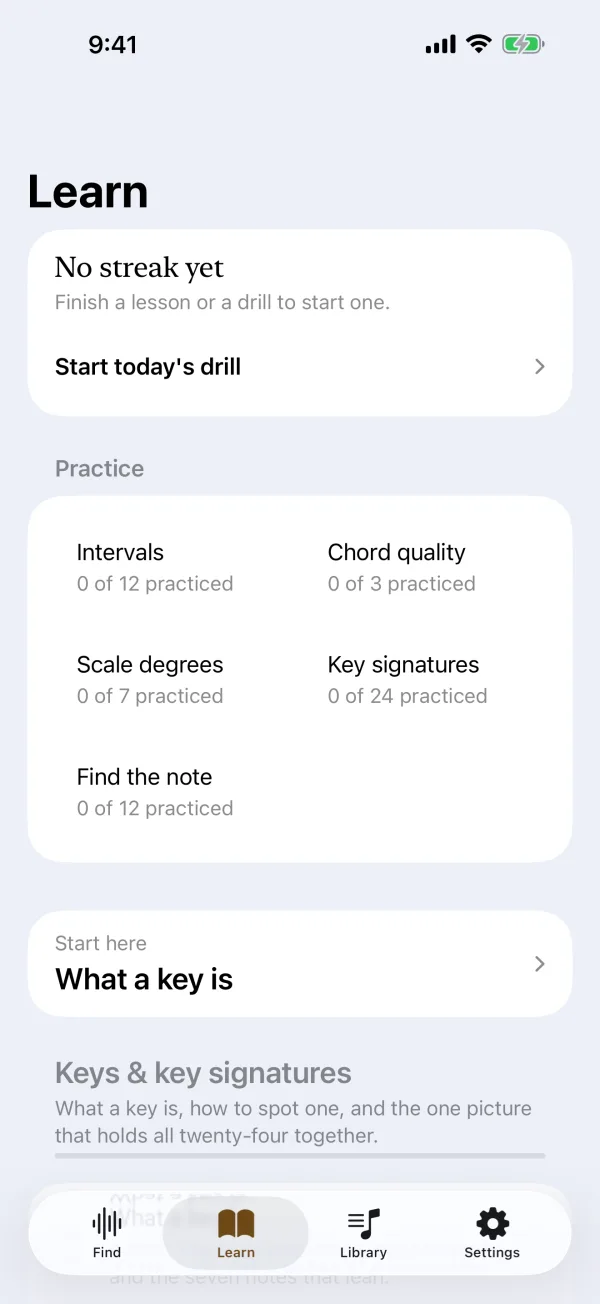
Short lessons build from what a key is to the whole circle of fifths, and a few minutes of practice a day makes it stick.
- An interactive circle of fifths you tap to hear and compare keys.
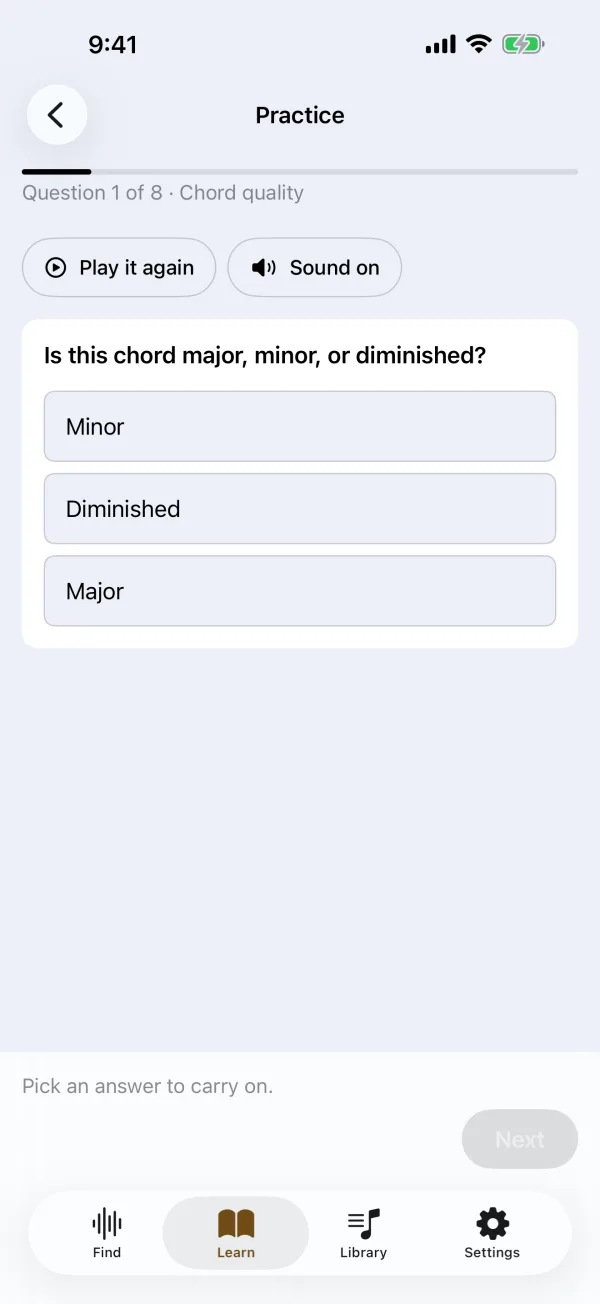
- A daily drill that brings back what you missed: intervals, chord quality, scale degrees, key signatures and finding notes.
- Practice any topic on its own, or in the key of a song you just found.
- Save songs to a library and group them into setlists for a gig or rehearsal.
Nothing leaves your phone.
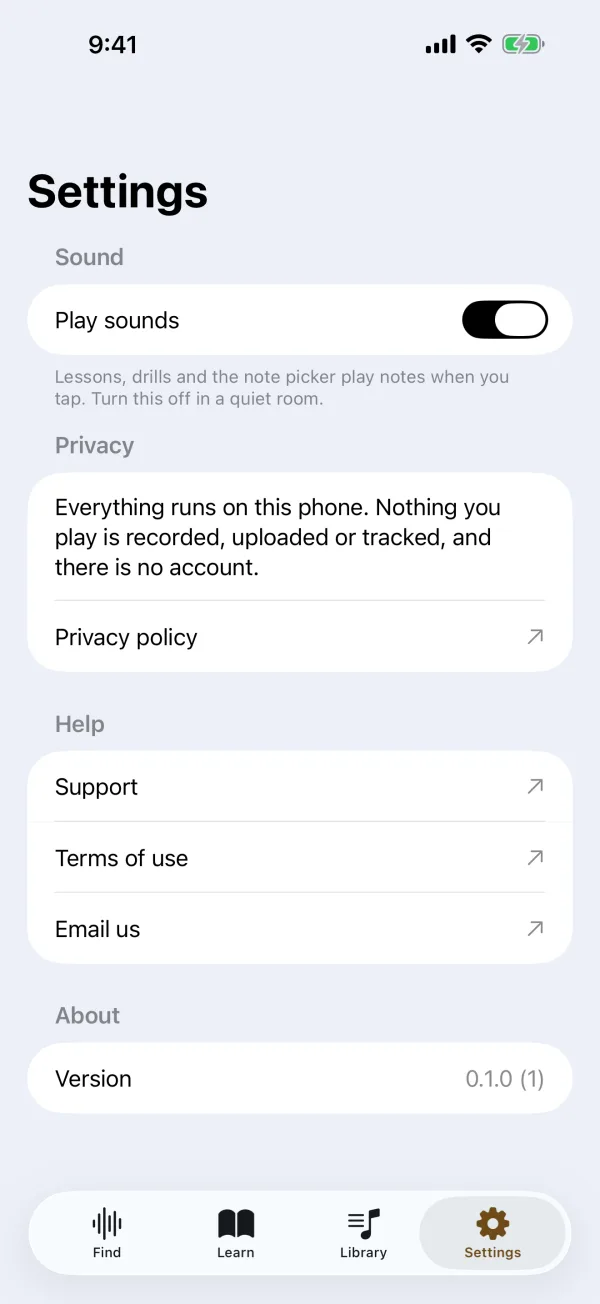
The listening, the theory and the lessons all run on the device. There is nothing to sign up for.
- No account and no sign-in.
- Nothing recorded or uploaded. Audio is analyzed as it plays and then discarded.
- No ads and no tracking.
The details are in the privacy policy.

Coming soon to iPhone and Android
For the guitarist working out a cover, the DJ who needs a Camelot code, the singer looking for a key that sits right, and anyone who has wondered why a song sounds the way it does.
- Key detection from the microphone, a file, or the notes you tap
- Chords, Camelot codes, capo positions and the reasoning behind every answer
- Lessons, an interactive circle of fifths, and a daily drill
- A library and setlists for the songs you look up
- Free, with no account and no ads
Coming to iPhone first, then Android.